
How to Choose a Corporate Uniform Manufacturer in Mumbai: A Buyer’s Checklist
Comparing corporate uniform manufacturers in Mumbai? This buyer’s checklist covers fabric, customization, MOQs, and delivery, everything to check before you order in bulk.
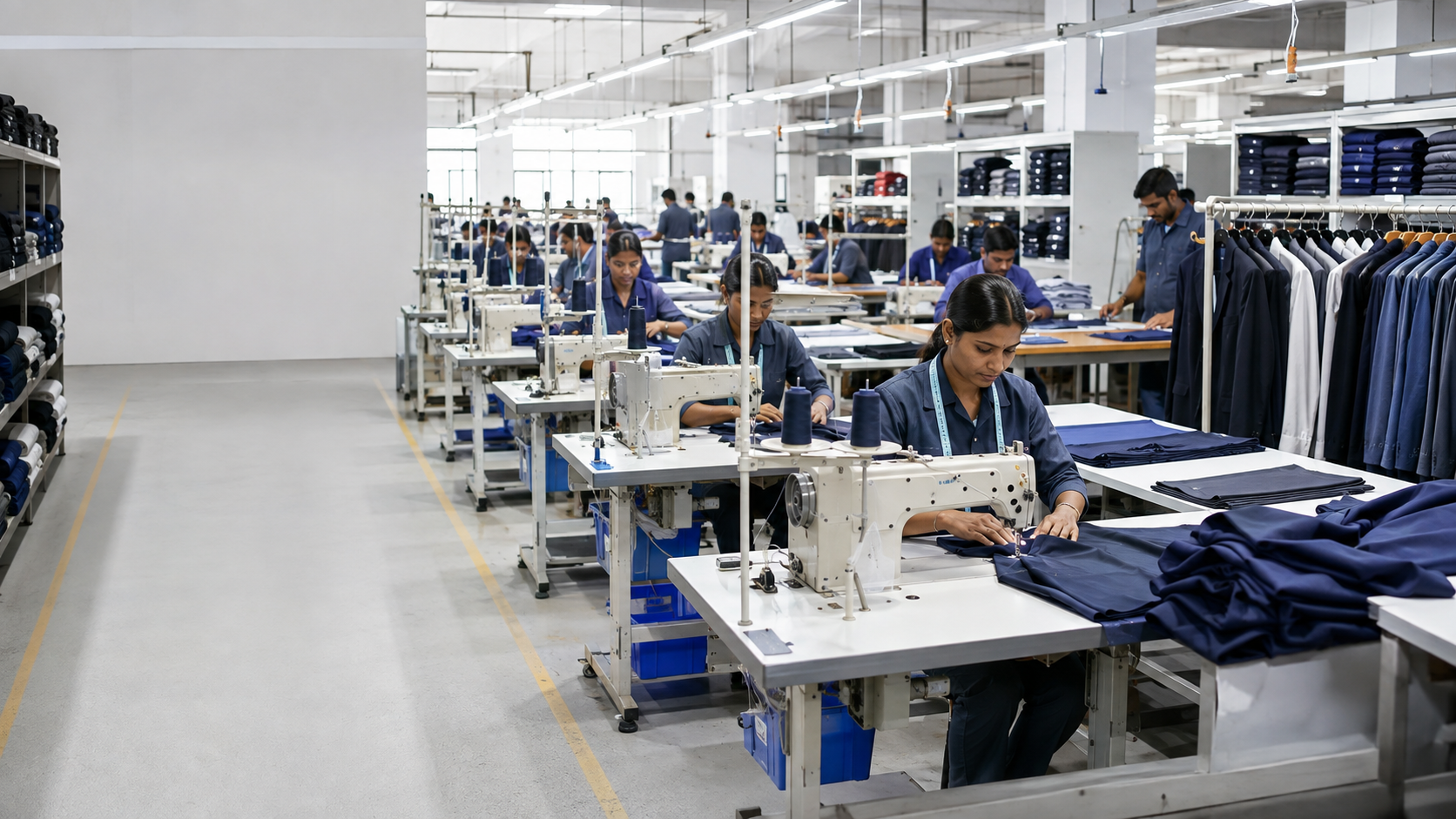
If you’re responsible for outfitting your team, whether that’s 20 people or 2,000, the manufacturer you choose ends up shaping how your company looks to clients, how comfortable your staff feels through a full working day, and how much time your HR or admin team spends chasing reorders and replacements. Yet most businesses only compare corporate uniform suppliers on price, and end up regretting it six months in when stitching comes apart or a reorder takes three weeks longer than promised.
Here’s what to actually check before you commit to a bulk order.
1. Start With Your Own Requirements, Not Their Catalogue
Before you contact a single corporate uniform manufacturer, get clear internally on:
- How many staff need uniforms, split by role (front office, floor staff, delivery, security, etc.)
- A rough male/female split: sizing and design needs differ meaningfully between the two, and a supplier who treats “office uniform” as one-size-fits-all is a red flag
- Whether you need seasonal variants (a Mumbai summer uniform is not the same fabric as a winter one)
- Whether logo branding is required, and in what form: embroidered, printed, or woven into the fabric
- Your rough timeline: is this a one-time bulk order, or do you need a manufacturer who can handle recurring restocks as staff join or leave?
A good uniform manufacturing company will ask you most of these questions in the first consultation. If they skip straight to a price quote without asking, that’s worth noting.
2. Check Whether They Specialize in Uniforms, Or Just Make Garments
There’s a real difference between a general garment manufacturer that occasionally takes uniform orders, and a company uniform manufacturer that specializes only in workwear. Specialization usually means:
- Fabric choices already tested for durability under daily wear and repeated washing
- Sizing charts built around real workforce data, not generic retail sizing
- Familiarity with industry-specific requirements (a hospital uniform has different fabric needs than a security uniform, for instance)
3. Ask About Fabric Sourcing and Quality, Not Just “Premium”
Almost every supplier will tell you they use “premium fabric.” That word means nothing on its own. Ask instead:
- What specific fabric blends do they use for corporate wear, and why?
- How do those fabrics perform in Mumbai’s heat and humidity: breathability, sweat visibility, and shrinkage after repeated washing all matter more here than in a cooler climate
- Can they show you fabric swatches or samples before committing to a bulk order?
A quick reference for the conversation:
| Fabric Type | Best Suited For | Breathability | Durability | Maintenance | Cost Tier |
|---|---|---|---|---|---|
| 100% Cotton | Front-office, hospitality, client-facing roles | High | Medium | Needs ironing; can shrink if untreated | Mid |
| Poly-Cotton Blend (65/35 or 80/20) | Most corporate and industrial uniforms | Medium–High | High | Wrinkle-resistant, low upkeep | Low–Mid |
| 100% Polyester | Security, industrial, outdoor-facing roles | Low–Medium | Very High | Minimal care, less breathable in heat | Low |
| Performance / Moisture-wicking blends | Aviation, field, or active roles | High (technical) | High | Requires specific wash care | High |
4. Confirm Real Customization Capability
“Custom uniforms” can mean very different things depending on the supplier. Clarify:
- Logo application: embroidery, screen printing, or sublimation printing all look and wear differently over time; ask which options they offer and what they’d recommend for your fabric choice
- Design flexibility: can they adjust collar styles, add piping or contrast trims, or work from a reference design you provide?
- Coverage across roles: shirts and trousers are the easy part; ask specifically about blazers, aprons, chef coats, and (relevant for many Indian corporate and hospitality settings) corporate uniform sarees for female staff, since not every manufacturer handles these well.
Which pieces you actually need tends to follow the role, not the department:
| Role / Setting | Recommended Pieces |
|---|---|
| Front office & reception | Shirt + Trouser, Blazer for client-facing staff |
| Hospitality / F&B service | Shirt + Apron, Cap for kitchen-adjacent roles |
| Kitchen & culinary staff | Chef Coat + Cap + Apron |
| Security personnel | Structured Shirt + Trouser (higher-GSM fabric) + Cap |
| Industrial / floor staff | T-Shirt or Shirt + Trouser (durable poly-cotton blend) |
| Female staff (corporate/hospitality) | Shirt + Trouser, or Saree, depending on your dress code policy |
A manufacturer who pushes back on a mismatched request (e.g., suggesting a lighter fabric for outdoor security staff instead of what you originally asked for) is usually more trustworthy than one who simply says yes to everything.
5. Insist on a Sample & Approval Step Before Bulk Production
Any manufacturer worth ordering from in bulk should follow roughly this process:
Consultation
On-site measurements, fabric selection, and requirement-gathering.
Sample & Design Approval
You see and approve an actual physical sample before mass production begins.
Production & Delivery
Bulk manufacturing only starts once you’ve signed off.
If a supplier wants to skip step 2 and go straight from consultation to bulk production, that’s a real risk: you’re committing to hundreds of garments before confirming fit, fabric feel, or finish.
6. Get Clarity on Minimum Order Quantities and Pricing Structure
Bulk uniform pricing works differently from retail. Before comparing quotes across corporate wear suppliers, make sure you’re comparing like for like:
- What is the minimum order quantity, and does it apply per style or across your total order?
- Does the price include the logo/branding step, or is that billed separately?
- Are there different rates for standard sizes versus larger or smaller sizes outside the typical range?
- What’s the reorder process and pricing if you need to top up in six months?
7. Ask About Delivery Timelines and What Happens After Delivery
On-time delivery matters more for uniforms than almost any other bulk order: new hires can’t be productive-facing customers or clients in mismatched or missing uniforms. Ask:
- What’s the realistic timeline from sample approval to full delivery, for your order size?
- What happens if a garment doesn’t fit correctly once delivered, is resizing or replacement covered?
- Do they offer ongoing support for reorders as your team grows, without needing to restart the entire consultation process each time?
8. Look for Proof, Not Just Promises
Testimonials are a start, but push a little further:
- Ask for examples of similar-sized orders they’ve fulfilled in your industry (hospitality, corporate, healthcare, security, industrial)
- Ask how long they’ve been manufacturing, specifically: “20+ years in uniform manufacturing” is a very different claim from “20+ years in business,” and worth confirming
- If possible, ask to see or visit the production facility, a manufacturer confident in their process usually won’t hesitate
9. Factor In Local Presence
A corporate uniform manufacturer based in or near Mumbai, Navi Mumbai, or Thane has a practical advantage: on-site consultations and fittings are far easier to arrange, sample rounds move faster, and any post-delivery adjustments don’t involve shipping garments across the country and back.
Quick Recap: The Checklist
Choosing a corporate uniform manufacturer is easier when you know exactly what to ask, and a supplier who welcomes these questions, rather than rushing you to a quote, is usually the one worth ordering from.
Defined your headcount, role split, and design requirements internally
Confirmed the supplier specializes in uniforms, not general garments
Asked specific questions about fabric composition and climate suitability
Verified customization options (branding method, garment range, saree/sari options if needed)
Confirmed a sample-and-approval step happens before bulk production
Understood the full pricing structure, including MOQs and branding costs
Clarified delivery timelines and post-delivery support
Checked for real client proof, ideally in your own industry
Considered local presence for easier consultations and fittings
Frequently Asked Questions
Everything buyers ask before committing to a bulk corporate uniform order.
MOQs vary by manufacturer, garment type, and how much customization is involved. Bulk manufacturers generally set MOQs suited to organizations rather than individuals; always confirm the exact number and whether it applies per style or across your total order.
This depends heavily on order size and customization complexity. Get a specific, written timeline from any manufacturer before confirming your order: “a few weeks” isn’t a commitment.
Yes. Most manufacturers offer embroidery, screen printing, or sublimation printing, each with different durability, look, and cost. Ask which method suits your chosen fabric best.
Not all of them; this is a specialized product, and it’s worth confirming upfront if sarees are part of your organization’s dress code, rather than assuming every supplier covers it.
Reputable manufacturers offer resizing or replacement. Get this policy confirmed in writing before you finalize the order, not after a problem comes up.
Yes, with the right manufacturer: one who keeps your original specifications and sizing on file can turn around a smaller reorder much faster than a first-time bulk order.
Ready to Start the Conversation?
Looking for a corporate uniform manufacturer in Mumbai who covers every point on this checklist? Book a free on-site consultation and we’ll walk you through fabric samples, design options, and pricing for your team size.