

The difference between a uniform and a dress code is simple: a uniform specifies the garments people wear, while a dress code provides rules within which people select their own clothing. The right option depends on your industry, customer contact, safety needs, budget and culture — and many organisations end up using a mix of both.
Difference Between a Uniform and a Dress Code: Quick Comparison
| Factor | Uniform | Dress Code |
|---|---|---|
| Clothing selection | Specific garments chosen by the organisation | Employees choose garments within stated rules |
| Brand consistency | High | Moderate to low |
| Employee flexibility | Limited to approved uniform options | Greater personal choice |
| Safety and hygiene | Easier to standardise | Depends on policy detail |
| Upfront employer cost | Usually higher | Usually lower |
| Ongoing management | Sizing, stock and replacement planning | Communication and consistent enforcement |
| Best suited to | Customer-facing, operational, safety-sensitive roles | Offices, creative teams, less customer-facing roles |
A uniform tells people what to wear. A dress code tells people how they are expected to dress.
Why the Difference Between a Uniform and a Dress Code Matters
Getting the difference between a uniform and a dress code wrong can be costly. Businesses that write a “uniform policy” but only supply a branded T-shirt end up with inconsistent, unbranded outfits on the rest of the body — confusing customers and staff alike. Businesses that write a dress code using vague terms like “smart” or “professional” run into constant disputes over what counts as acceptable. Getting this right up front saves money on reprints, reduces HR disputes, and protects your brand image from day one.
What Is a Uniform?
A workplace uniform is a standardised set of clothing selected for a particular organisation, department or job role. Uniforms may include shirts, trousers, skirts, blazers, aprons, scrubs, coveralls, jackets or caps, usually in consistent colours, fabrics and branding so employees are easy to identify.
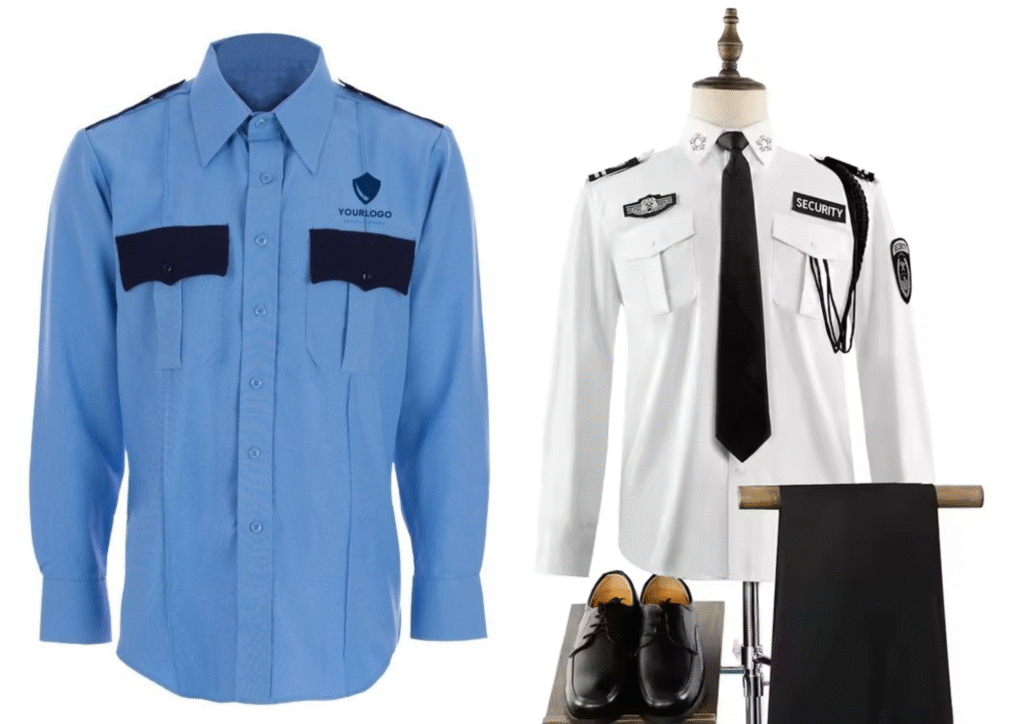
Common examples include scrubs worn by hospital staff, branded shirts for hotel employees, coveralls for factory and maintenance teams, formal wear for security personnel, and branded uniforms for schools and office reception teams.
Why Organisations Choose Uniforms
- Create a consistent, professional appearance
- Make employees easy for customers to identify
- Strengthen brand recognition
- Standardise clothing for hygiene or operational needs
- Reduce uncertainty about acceptable attire
- Support equality by reducing visible clothing differences
A well-designed uniform should do more than look good — it needs to support movement, comfort, climate and washing frequency for the actual job.
What Is a Dress Code?
A dress code is a written set of guidelines describing what employees may or may not wear. Instead of one specific outfit, the organisation sets boundaries — for example, formal clothing in neutral colours, closed footwear, or collared shirts — while employees choose the actual garments.
Common workplace dress codes include casual, smart casual, business casual, business professional, formal, and safety- or hygiene-specific attire. “Dress professionally” is rarely enough on its own — a useful policy needs clear descriptions and visual examples.
Why Organisations Choose Dress Codes
- Greater employee choice and personal expression
- A professional look without identical clothing
- Flexibility for different body types and preferences
- Employees can use suitable clothing they already own
- A less rigid workplace culture
Seven Key Differences Between a Uniform and a Dress Code
1. Specific Clothing vs General Rules
A uniform defines the actual garments, with the organisation controlling design, colour, fabric and branding. A dress code defines what’s acceptable while leaving final selection to the employee — for example, a navy branded shirt with grey trousers (uniform) versus a formal shirt and trousers in neutral colours (dress code).
2. Brand Consistency
Uniforms create a highly consistent visual identity, which matters most when employees regularly interact with customers. Dress codes can still look professional, but the result naturally varies since employees pick their own clothes.
3. Employee Choice
Dress codes usually give employees more freedom. Modern uniform programmes can still add flexibility through multiple approved styles, different fits, seasonal alternatives, and modest-wear or maternity options.
4. Safety, Hygiene and Function
Healthcare, food service, manufacturing and logistics teams often need garments built for hygiene, visibility or mobility. A uniform should never be assumed to double as certified PPE — where protective clothing is required, follow the applicable safety standards and get specialist advice. A general dress code may work for low-risk environments but often lacks the control needed where fabric or garment construction affects safety.
5. Cost and Ownership
Uniforms create a direct employer cost — design, production, branding, sizing and replacements. Dress codes usually cost the employer less since employees buy their own clothes, though a poorly written dress code can create hidden costs through inconsistent presentation and repeated enforcement. Compare total cost per wear, not just purchase price.
6. Management and Enforcement
Uniforms make compliance easy to spot, but still need sizing, stock and replacement management. Dress codes need less inventory work but more interpretation — managers need clear, visual guidance so terms like “smart” or “appropriate” are applied consistently.
7. Customer Experience
Uniforms can make staff easier to identify and build customer confidence in hospitality, healthcare, retail and security. A dress code may be enough where customers value individuality or employees rarely meet the public.
Which Option Is Better for Your Organisation?
There’s no universal winner — use these questions to guide the decision:
- How important is brand recognition? Choose a uniform for one clear visual identity; a dress code can work if identical colours or branding aren’t essential.
- Are employees customer-facing? Uniforms suit reception, hospitality, healthcare, retail, security and delivery roles; flexible dress codes suit internal, remote or creative roles.
- Are there safety or hygiene requirements? Standardised uniforms give more control; assess any protective requirements separately.
- How much flexibility does your culture need? Creative teams may prefer a dress code; precision- or recognition-focused businesses may prefer uniforms.
- Can you manage a uniform programme? You’ll need to plan sizing, sampling, allocation, new joiners, seasonal changes and reorders.
When a Hybrid Approach Works Best
Many organisations combine both: hotel reception and service staff in uniform while managers follow a formal dress code; clinical teams in scrubs while admin staff follow business-casual rules; factory-floor employees in standardised workwear while office teams follow a corporate dress code. The hybrid approach works when each group’s requirements are clearly documented — a branded T-shirt paired with unspecified personal clothing is better described as a partial uniform supported by a dress code, not a complete uniform.
How to Introduce a Uniform or Dress Code Successfully
- Define the objective — safety, hygiene, recognition, brand consistency or customer confidence.
- Assess each job role — movement, climate, customer contact, storage and washing needs, safety risks.
- Consult employees on fit, comfort, cultural requirements and practical problems with current clothing.
- Create clear standards covering approved clothing, footwear, branding, grooming, religious and medical accommodations, and replacement responsibilities.
- Test before a full rollout — run a wear trial across roles and body types, checking fit, comfort, breathability and colour stability.
- Review the policy regularly as working conditions, expectations and brand needs change.
Common Mistakes to Avoid
- Choosing appearance over function — a uniform that looks good but becomes uncomfortable on a long shift creates poor compliance.
- Writing vague dress-code rules — terms like “smart” or “appropriate” mean different things to different people; add examples.
- Ignoring different body types — offer proper sizing and fit options.
- Failing to plan for reorders as employees join, leave, change sizes or damage garments.
- Skipping employee input — people support a policy more readily when they understand its purpose.
How Uniform Weavers Can Help
Uniform Weavers designs and manufactures customised uniforms for organisations across Mumbai and India. We work with businesses and institutions to balance brand identity, employee comfort and operational requirements — through design consultation, fabric selection, sampling, sizing support, logo application, bulk production and delivery.
Explore our industry-specific solutions: corporate uniforms, hospital uniforms, hotel uniforms, school uniforms, security uniforms and industrial uniforms.




Not sure whether your team needs a complete uniform, branded garments or a hybrid programme? Tell us your industry, team size, location and required launch date — we’ll help you identify a practical solution.
Speak to Uniform Weavers on WhatsApp
Final Takeaway
The difference between a uniform and a dress code comes down to specificity and control. A uniform provides standardised garments and stronger visual consistency; a dress code provides rules while giving employees more choice; a hybrid approach can offer both. Whichever you choose, success depends on clear communication, inclusive planning and practical implementation — not the policy on paper.
Frequently Asked Questions
Can an organisation use both uniforms and a dress code?
Yes. Many organisations provide uniforms for customer-facing or operational roles while using a dress code for managers, office employees or remote teams. The requirements for each group should be documented clearly.
Which is cheaper: a uniform or a dress code?
A dress code normally has a lower direct employer cost because employees may purchase their own clothing. Uniforms require an upfront investment but can provide stronger branding, consistency and role-specific functionality. Compare total cost per wear rather than purchase price alone.
Are workplace uniforms outdated?
No. Modern uniforms can offer different fits, breathable fabrics, seasonal options and contemporary designs. Success depends on comfort, functionality and relevance to the job, not simply whether everyone wears the same garment.
Do employees prefer uniforms or dress codes?
Preferences vary. Some employees appreciate the simplicity of a uniform because it removes daily clothing decisions. Others prefer the personal choice a dress code provides. Consultation, good design and appropriate fit matter in either system.
Can a dress code be as strict as a uniform?
Yes. A detailed dress code can regulate colours, garments, footwear, grooming and accessories, and in some cases provides very little practical freedom even though employees purchase their own clothing.
Which industries benefit most from uniforms?
Uniforms are particularly valuable in hospitality, healthcare, education, retail, security, logistics, manufacturing and facility management — and other customer-facing or operational environments.
What should be considered when designing a company uniform?
Consider job responsibilities, climate, movement, safety, employee comfort, brand colours, washing frequency, sizing, garment lifespan, reordering and seasonal requirements. Complete a wear trial before large-scale production.
2 Responses